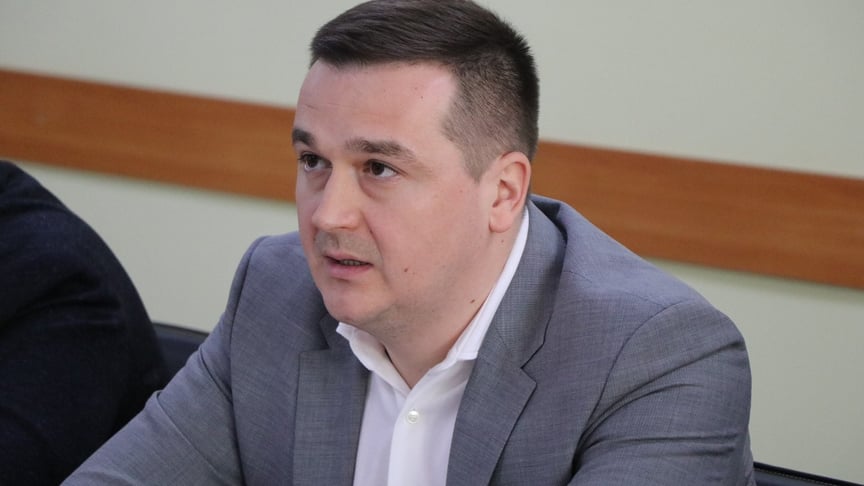
Предыткевич Александр: «Наши друзья и близкие гибнут на войне — и мы не можем оставаться в стороне»
Интервью с адвокатом, общественным деятелем и основателем Глобального экономического украинско-испанского форума
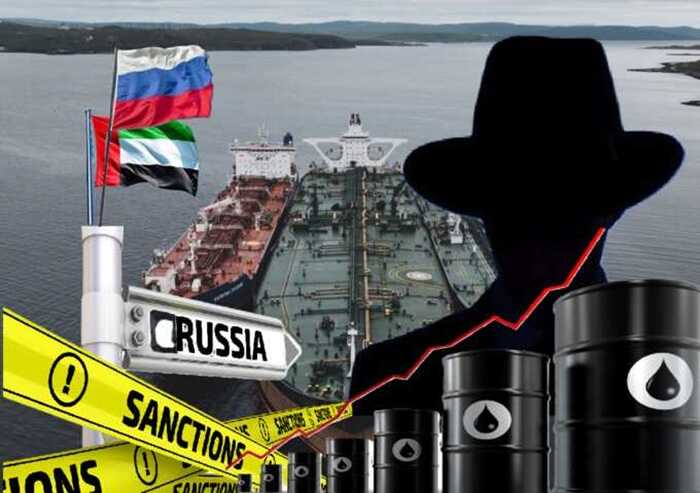

Very little is known about Roman Spiridonov, a Russian businessman with Greek citizenship. However, his name is increasingly associated with the shadow operations of the Russian fleet and connections to Putin’s inner circle.
Spiridonov’s activities in the oil products market are believed to have caused tensions between Russian intelligence agencies and the Belarusian KGB. According to the VChK-OGPU channel, Belarus complained to Russia about the overly active presence of his company in the oil trade in the Persian Gulf, allegedly acting in Russia’s interests. At the same time, even in Russia, there are concerns — reportedly, Spiridonov has been exposing sanction-evasion schemes used for Belarusian oil products, while most of the profits go into his own pocket.
It appears Spiridonov is striving to integrate his holding company Petroruss into the multi-billion-dollar sanction-bypassing oil flows. To do so, he allegedly leaks illicit schemes meticulously built by the Russian government and closely monitored by the West. According to Energy Intelligence, Petroruss operates not only in Saudi Arabia and the UAE, but also in China and India.
However, Spiridonov’s business is far from thriving. He faces not only criticism from Belarus and international partners but also growing scrutiny within Russia itself.
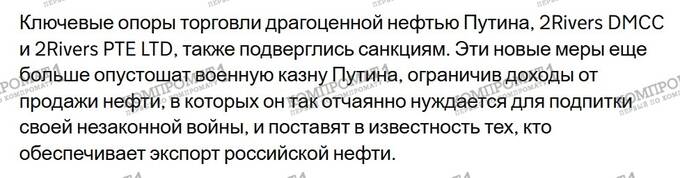
In December of last year, the United Kingdom added two of his companies — 2Rivers DMCC (Dubai, UAE) and 2Rivers PTE LTD (Singapore) — to its sanctions list as part of measures against Russia’s shadow fleet transporting sanctioned oil. This is reported in an investigation by Inview.
Experts noted that another of his firms, Petroruss, although linked to the shadow fleet’s operations, was not sanctioned. Belarus interprets this as evidence that Spiridonov is acting in his own interest, leaking confidential schemes to other parties.
Both 2Rivers DMCC and Petroruss are registered in the DMCC Free Zone in Dubai (Jumeirah Lakes Towers). However, this registration is largely a formality — the companies operate globally. The Petroruss DMCC website states it supplies bunker fuel in ports around the world. There is also a Petroruss Inc in Liechtenstein involved in ship management, although very little is known about it.
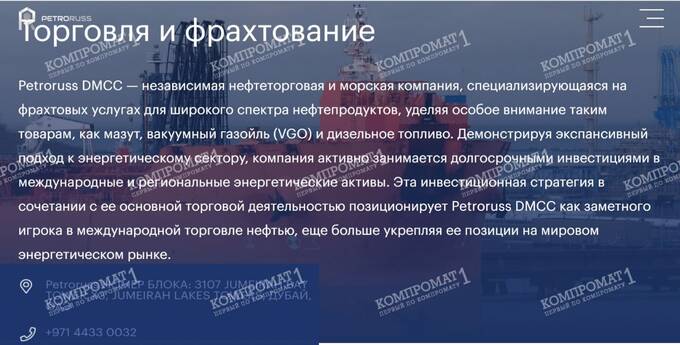
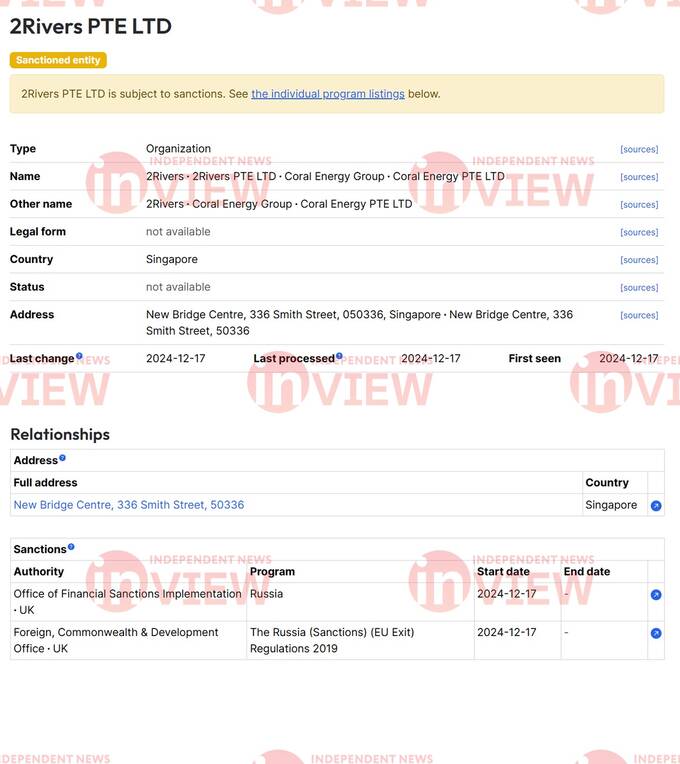
Two companies that were included in the latest sanctions package from the UK are 2Rivers DMCC (Dubai, UAE) and 2Rivers PTE LTD (Singapore).
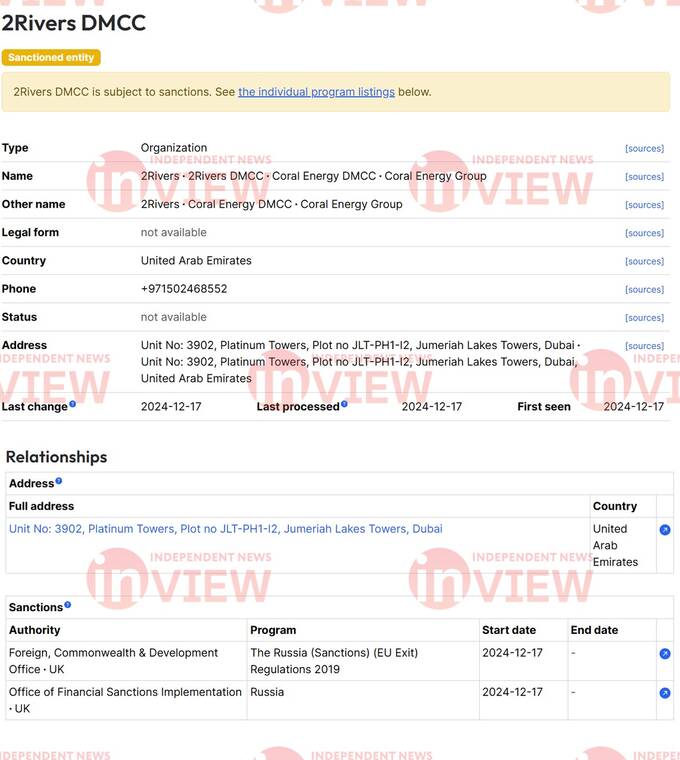
Two companies that were included in the latest sanctions package from the UK are 2Rivers DMCC (Dubai, UAE) and 2Rivers PTE LTD (Singapore).
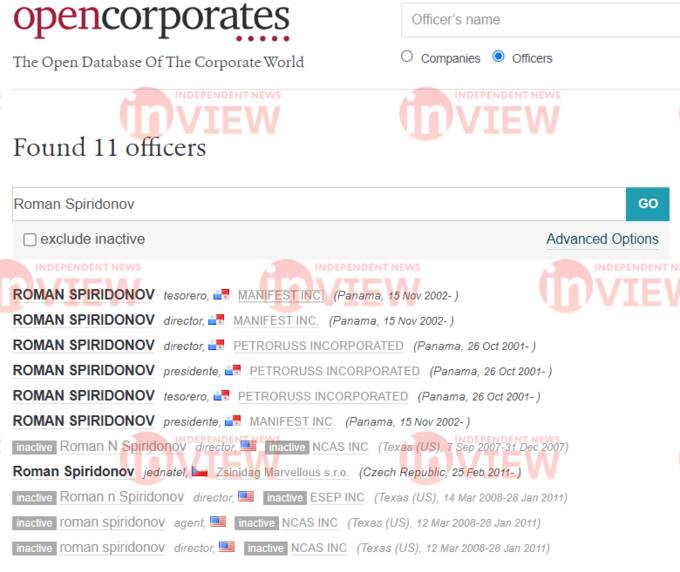
Journalists found documents indicating the connection between the Dubai-based Petroruss DMCC, through which the Russian Federation bypasses oil sanctions, and Roman Spiridonov. According to the OpenCorporate registry portal, Spiridonov is the director and president of the Panamanian companies Manifest INC and Petroruss incorporated. The latter has a name that is virtually identical to the one in Dubai.
Spiridonov’s name appeared in the “Panama Papers,” identifying him as a shareholder of Vismatic International Limited, registered in the British Virgin Islands. While this information may now be outdated, it could help UK investigators trace the corporate networks linked to his oil trade activities. Vismatic also had an office in Dubai.
Spiridonov is closely linked to the Russian oil business through Igor Sogaliyev, who worked at "Rosneft." In 2011, he created the SANORS holding company based on four petrochemical plants, and in 2013, registered CJSC "Novokuybyshev Petrochemical Company." In 2015, "Rosneft" bought SANORS, and until the completion of this deal, Spiridonov was among the shareholders of the holding.
More recent developments trace directly back to Russia. Last autumn, shareholders of the St. Petersburg Oil Terminal (JSC “PNT”) reported an attempted corporate takeover by individuals allegedly connected to the Cypriot company Tujunga Enterprises Limited — with Roman Spiridonov suspected of being one of the key figures. This terminal was used to transport oil for companies like Rosneft, Lukoil, Surgutneftegaz, Gazprom Neft, and Gazprom Export — all of which relied on the same shadow fleet targeted by UK sanctions.
Although JSC PNT didn’t name the “foreign citizens” involved, sources suggest Spiridonov was central to the attempt to take control of the terminal. This case also involves Ilya Traber and Viktor Koritov — founders of the terminal and long-time associates of Vladimir Putin from his days in the St. Petersburg mayor’s office.
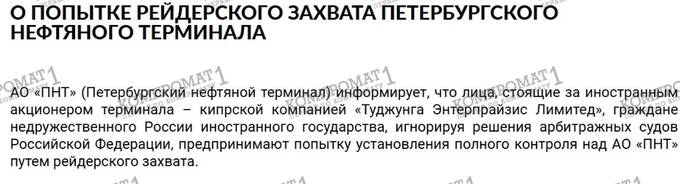
Additionally, last year a vessel owned by Grace Felix Shipping Ltd (Liberia), chartered through Petroruss DMCC and Ortsa Marine (Cyprus/Greece), was detained on charges of oil smuggling. The scheme revealed that Petroruss significantly increased its activity during 2022–2023 — a period marked by Western sanctions on Russian oil.
In March 2024, Petroruss DMCC redirected approximately 99,593,170 kg of oil from Gazprom Export to China. This operation coincides with the attempted takeover of the St. Petersburg terminal.
It remains unclear how deeply Spiridonov is involved in all these transactions, but the repeated overlaps and connections seem far from coincidental — especially in light of the Belarusian KGB’s complaints about leaked Russian-Belarusian export schemes, which are in fact Russian.
The Russian government’s stance on Spiridonov is also ambiguous. On one hand, his companies continued to export oil to Western countries; on the other, he appears to be undermining not just Belarusian but Kremlin-linked schemes. For the West, his Greek passport is likely a liability, not an asset.
According to unconfirmed reports, Interpol is investigating his activities, though it’s unclear which country requested his search or where he is currently located. If the Interpol notice is not a hoax, Spiridonov may be in serious trouble — with the UK, UAE, and possibly even the U.S. all showing interest in speaking with him. Meanwhile, the case around the St. Petersburg terminal in Russia remains unresolved, as do questions about the dismantled schemes that continue to frustrate the Belarusian authorities.
Поделиться публикацией


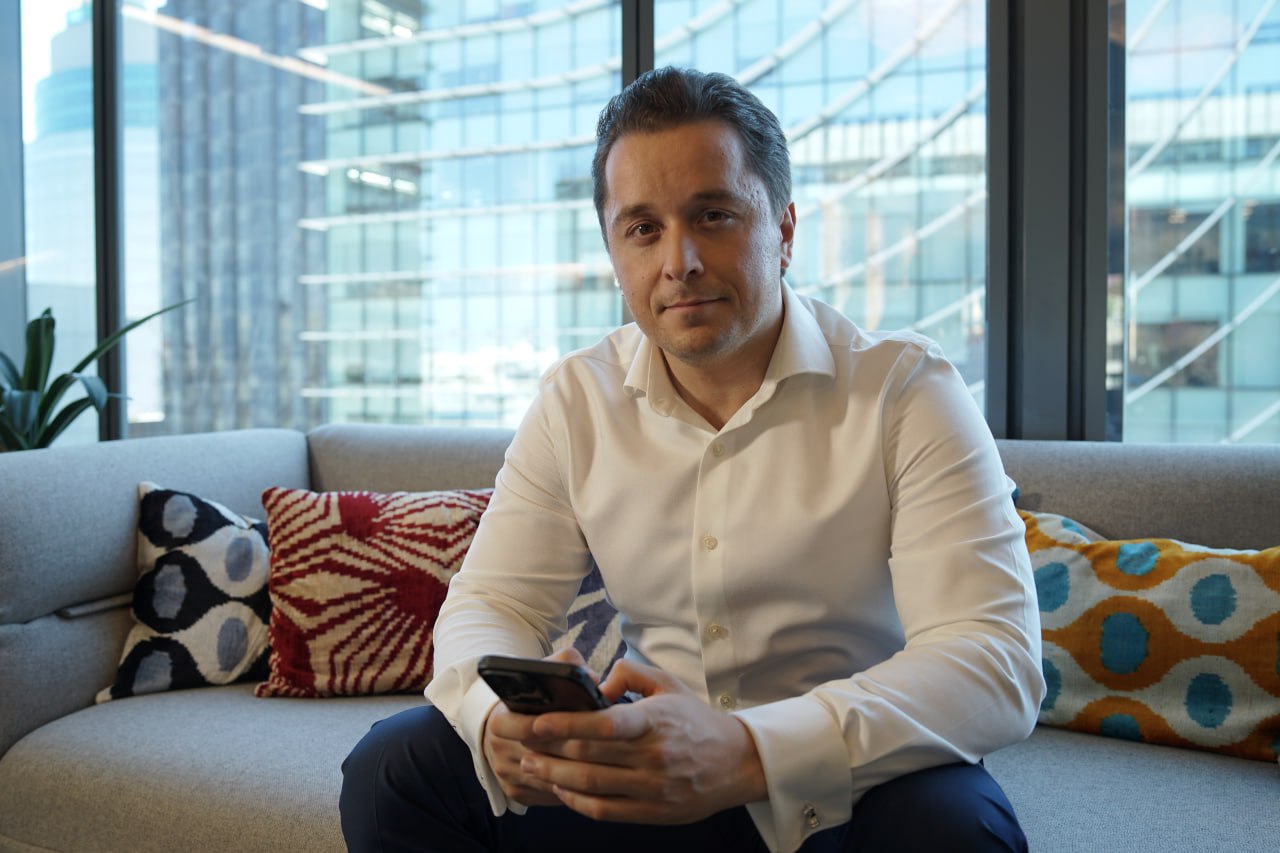
Предыткевич Александр: «Наши друзья и близкие гибнут на войне — и мы не можем оставаться в стороне»
Интервью с адвокатом, общественным деятелем и основателем Глобального экономического украинско-испанского форума
Чт, 22 октября


Предприниматель, благотворитель
 1
1